Medical marketing videos are revolutionizing how healthcare practices connect with patients, moving far beyond traditional brochures and waiting room pamphlets. Here's what you need to know:
Key Types of Medical Marketing Videos:
The numbers tell a compelling story. 94% of patients look for online reviews when evaluating providers, while 77% of patients start their healthcare journey on search engines. Even more impressive, medical videos get 49% more social media engagement than other post types, and viewers retain 95% of video content compared to just 10% when reading text.
This shift makes perfect sense. As one healthcare marketing expert noted: "Chances are you're searching the internet for information so you can make a decision based on your findings? So are your patients!"
Video marketing isn't just about creating content - it's about building trust in an industry where trust matters most. Whether you're explaining a complex procedure, introducing your team, or sharing patient success stories, video helps you connect with people who are often anxious, confused, or overwhelmed.
I'm Grace Ascione, a registered nurse with an MBA who has spent over 15 years helping healthcare businesses steer digital marketing challenges. My clinical background gives me unique insight into what patients need from medical marketing videos and how to create content that truly resonates with medical audiences.
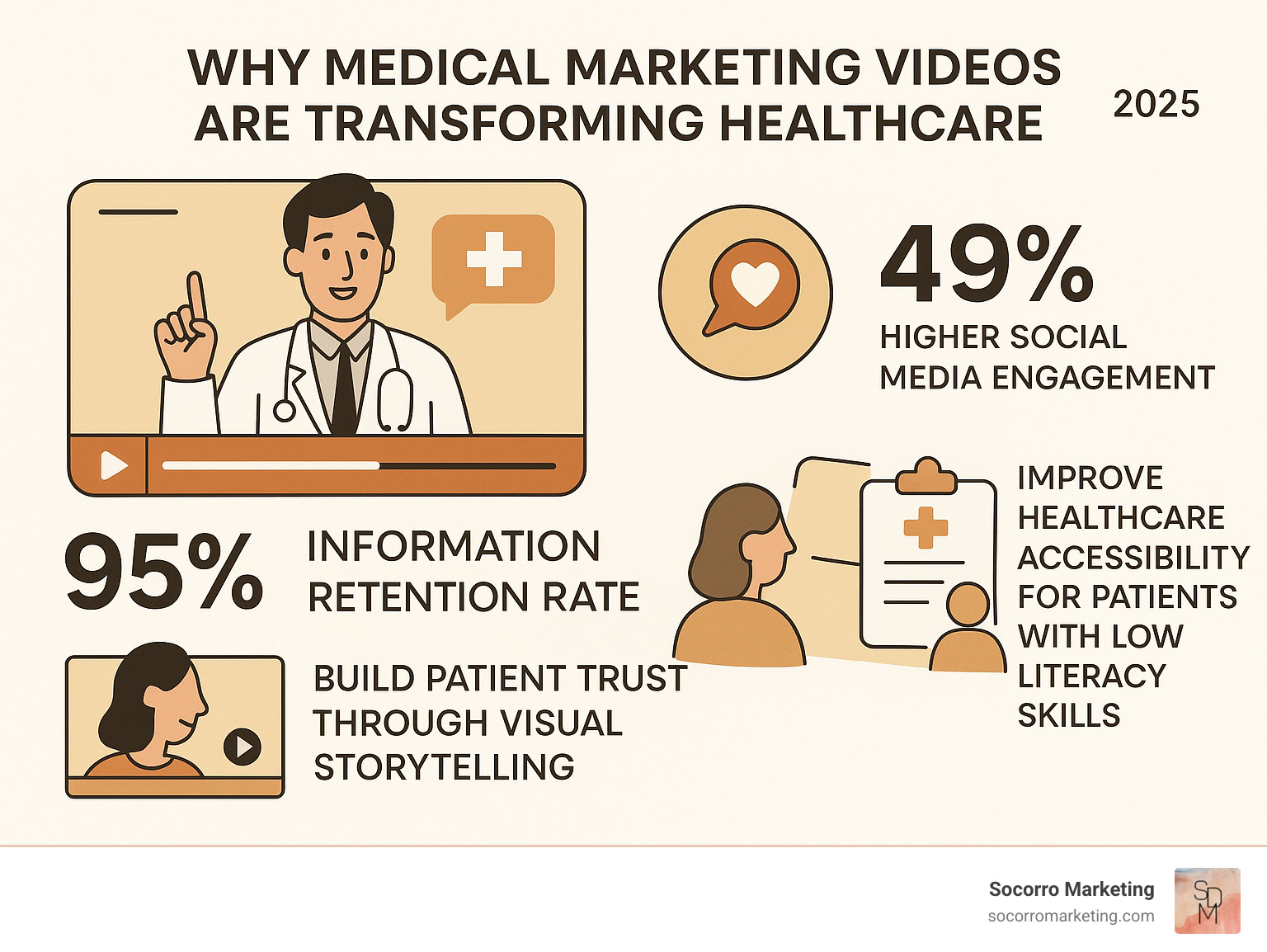
Healthcare is deeply personal. When someone searches for a doctor or treatment, they're often scared, confused, or vulnerable. That's why medical marketing videos are so powerful – they let you connect with patients on a human level before they ever walk through your door.
Your patients feel that mix of anxiety and hope when facing medical decisions. Video helps bridge that emotional gap by showing the real people behind your practice and the authentic experiences of those you've helped.
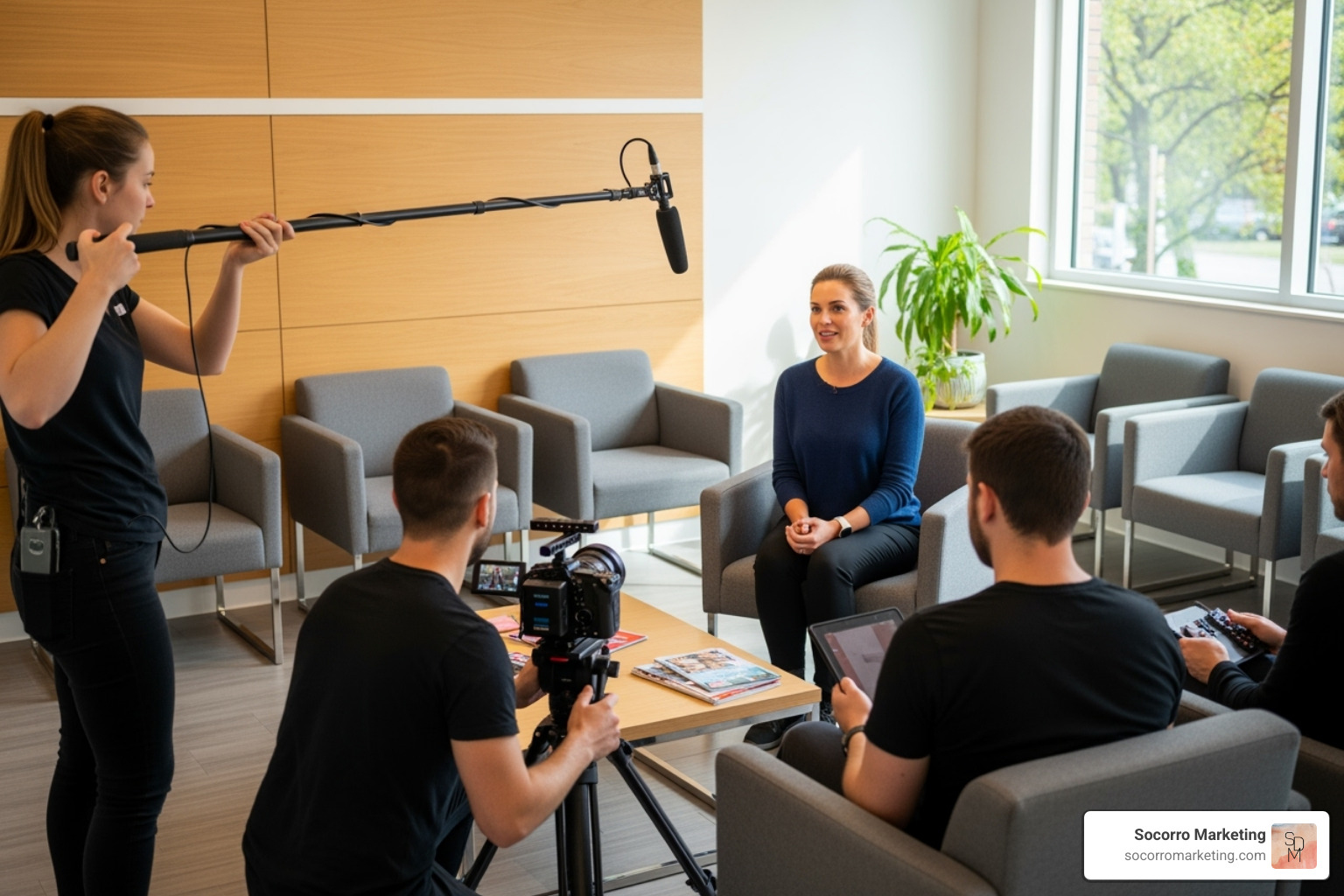
Before diving into the eight types, remember you don't need Hollywood-level equipment. A modern smartphone, good external microphone, basic lighting setup, and simple editing software can work wonders. Focus on authentic, helpful content.
Nothing builds trust like hearing from someone who's been in your shoes. Patient testimonial videos showcase real stories – the nervous first-time patient who found comfort in your approach, or the long-term patient whose life improved dramatically after treatment.
These videos work because they provide social proof. Up to 90% of people trust what a customer says about a business more than what a business says about itself. When potential patients see authentic experiences, it helps overcome their natural hesitation about seeking care.
Apollo Hospital has mastered this approach, sharing genuine patient stories that highlight both medical expertise and compassionate care.
Medical jargon can be intimidating. Educational explainer videos take complex topics and make them understandable. Whether explaining how diabetes affects the body or walking through surgery, these videos improve health literacy while establishing your authority.
Animation works beautifully here. Whiteboard animations can break down treatment plans step-by-step, while animated videos can illustrate biological processes impossible to film. This is especially important for patients with limited health literacy.
Bupa's animated health explainers are perfect examples. They take potentially scary medical concepts and present them in approachable ways. More on creating effective content can help you develop educational materials that truly connect.
First impressions matter. 'Meet the Doctor' videos let patients get to know you before their appointment. They can see your personality, hear your voice, and understand your approach to care.
These videos humanize your practice. Instead of walking into a sterile environment to meet a stranger, patients feel like they're visiting someone they already know. This familiarity reduces anxiety and builds rapport from the start.
Share your background, philosophy of care, maybe even your hobbies. Patients want to know the person behind the white coat.
Fear of the unknown is real in healthcare. Facility tour videos give patients a virtual walkthrough, showing exactly what to expect. This is especially valuable for pediatric practices, dental offices, or any specialty where patients might feel anxious.
Show your modern equipment, highlight safety protocols, and create a welcoming atmosphere. When patients can see your clean, professional environment ahead of time, it provides tremendous reassurance.
Explaining procedures visually helps patients understand what they're agreeing to. These videos set realistic expectations, answer common questions, and support informed consent.
For sensitive procedures, animation can be incredibly effective. You can illustrate internal processes or complex surgical techniques without live footage, maintaining dignity while providing clarity.
These videos save time during consultations. When patients arrive already understanding the basics, you can focus on addressing their specific concerns.
Your practice has a story – why you became a healthcare provider, what drives your team, how you serve your community. Brand story videos communicate these values and create emotional connections.
The Cleveland Clinic's powerful video on empathy is a masterclass in healthcare storytelling. It doesn't promote services or tout credentials – it simply shows what healthcare means from a human perspective.
These videos differentiate you from competitors by highlighting what makes your practice unique.
Healthcare extends beyond individual patient care into community wellness. Campaign videos can promote preventative care, raise awareness for health conditions, or support public health initiatives.
The Mayo Clinic's #StrongArmSelfie campaign brilliantly engaged the public in colorectal cancer awareness. By encouraging user-generated content, they amplified their message far beyond their own channels.
These campaigns show your commitment to community health while building brand awareness.
Your staff probably answers the same questions dozens of times daily. FAQ videos provide clear, consistent answers while freeing up your team for more complex interactions.
These videos also boost your website's SEO by directly addressing common search queries. When someone searches "what insurance do you accept" or "how do I prepare for my procedure," your FAQ videos can appear in search results.
Each of these medical marketing videos serves a specific purpose in building patient trust and streamlining your practice operations.
Creating effective medical marketing videos requires careful planning, steady hands, and attention to detail. Success depends on understanding HIPAA compliance, mastering storytelling techniques, maintaining production quality, and ensuring accessibility for all patients.
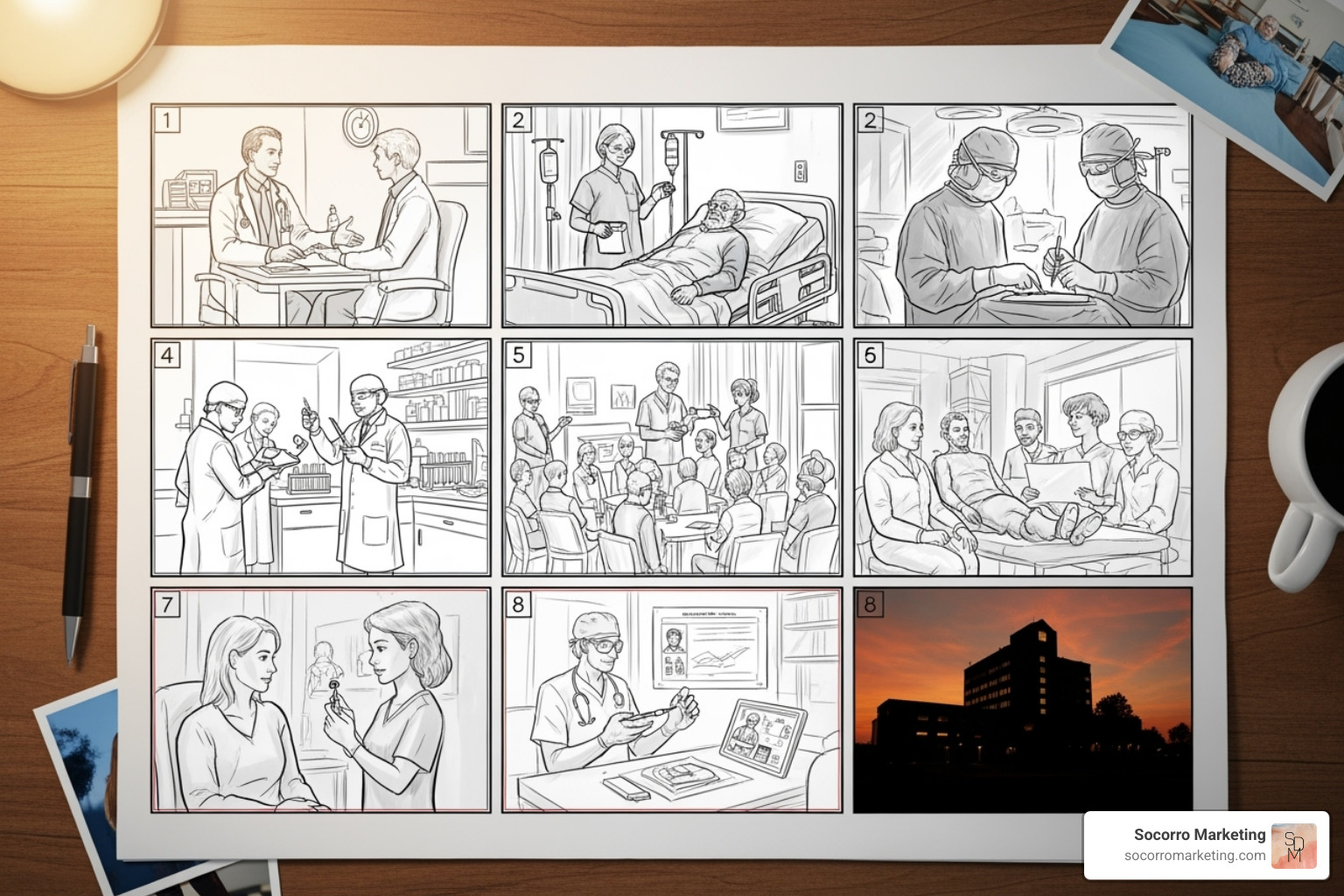
The first big decision is whether to create videos in-house or hire professionals. Both paths have merits, depending on your budget, timeline, and quality expectations.
| Feature | DIY Production | Professional Production |
|---|---|---|
| Cost | Low (equipment, software) | High (agency fees, crew, specialized equipment) |
| Quality | Variable (can be good with skill, but often amateur) | High (cinematic visuals, professional audio, polished editing) |
| Time Investment | High (learning, shooting, editing) | Low for you (outsourced) |
| Expertise | Requires learning about lighting, sound, editing | Relies on experienced professionals |
| Brand Impact | Can be authentic; risk of appearing unprofessional | Consistent, high-quality brand representation |
| Compliance | Requires self-education on HIPAA | Agencies often have experience with healthcare regulations |
If choosing DIY, you'll need essential equipment including a modern smartphone or decent camera, quality external microphone, basic lighting setup, and user-friendly editing software.
Define your audience thoroughly. What keeps them awake at night? What questions do they Google at 2 AM? When you understand their concerns, you can create content that speaks directly to their needs.
Focus on storytelling, not selling. Healthcare is inherently personal. Patients don't want to be sold to – they want to feel understood. Share genuine patient journeys, highlight your team's dedication, or explain how your practice makes a difference. Videos explaining common conditions and treatments resonate because they provide real value.
Keep it short and impactful. 5% of viewers quit watching after one minute, and 60% after two minutes. With human attention spans at just 8 seconds, every moment counts. Aim for one to three minutes maximum.
Optimize for mobile viewing since over half of people watch videos strictly on mobile devices. Think about vertical formats, readable text sizes, and clear visuals that work on smaller screens.
Use clear, jargon-free language that anyone could understand. Medical terminology might make you sound smart, but it makes patients feel excluded. Defining your brand message is key to ensuring consistency across all your videos.
Even the most moving video falls flat without a clear next step. Your call to action tells patients exactly what to do next. Whether you want them to "Book an appointment," "Download our guide," "Call us today," or "Learn more on our blog," make your CTA clear and concise.
The key question: What are you expecting viewers to do after watching? Make that action as easy as possible with clickable links, phone numbers, or simple instructions.
This is where healthcare video marketing gets serious. HIPAA compliance isn't optional – it's the law, and violations can be costly.
Obtaining written consent is your first step. Every patient featured must understand exactly how their story, image, or information will be used, including where the video will be shared and who will have access.
De-identifying patient information protects confidentiality while allowing you to share valuable stories. This might mean using first names only, avoiding specific dates, or focusing on outcomes rather than personal details.
Secure video hosting prevents unauthorized access. Choose platforms offering encryption and access controls, and avoid storing sensitive content on unsecured devices.
Understanding legal requirements and protecting patient confidentiality isn't just about following rules – it's about maintaining trust. When in doubt, consult legal experts who understand healthcare regulations. Partnering with a medically-informed marketing team becomes invaluable, as we understand these nuances from both clinical and marketing perspectives.
Creating amazing medical marketing videos is just the beginning of your journey. The real magic happens when you understand how your videos are performing and get them in front of the right people at the right time.
Think of video analytics like taking your patient's vital signs - they tell you what's working well and what needs attention. Without tracking your Key Performance Indicators (KPIs), you're essentially flying blind, missing opportunities to refine your approach and maximize your return on investment.
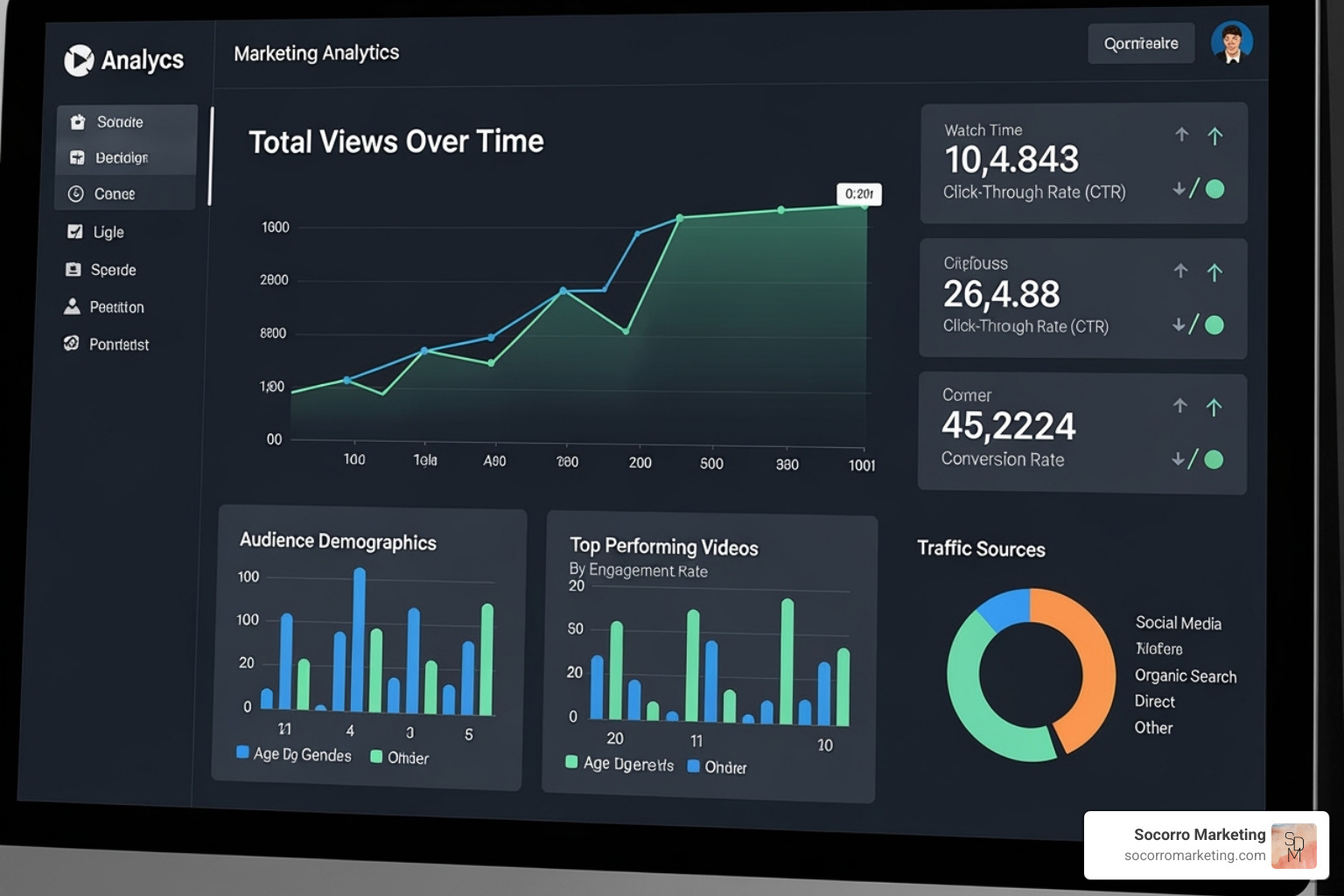
When it comes to measuring your video's health (pun intended!), there are several vital signs to monitor closely.
View count and watch time give you the big picture. How many eyes are on your content, and more importantly, are people sticking around? Viewers retain 95% of video content compared to just 10% when reading text, but watch time reveals whether your content truly captivates your audience from start to finish.
Engagement rate is where the magic really shows up. We're talking about likes, comments, and shares - the digital equivalent of patients nodding along and asking thoughtful questions during a consultation. Here's something exciting: medical videos get 49% more social media engagement than other post types. That's your audience telling you they find real value in what you're sharing.
Click-through rate tells you how compelling your call-to-action is. Are viewers inspired enough to take that next step? Meanwhile, conversion rate is your ultimate success metric - how many of those viewers actually booked an appointment, downloaded your guide, or took another meaningful action?
Don't overlook audience retention data. This shows you exactly where viewers drop off, giving you invaluable insights into which parts of your video resonate most and where you might be losing people's attention.
By diving deep into these metrics, you'll find what truly connects with your patients and can fine-tune your future content accordingly. Learn how to increase organic traffic to complement your video strategy and ensure your content reaches those who need it most.
Getting your videos seen by the right people requires strategic distribution across multiple channels. Think of it as ensuring your message reaches patients wherever they spend their time online.
Your practice website should be your video's home base. Embed videos directly on service pages, your 'About Us' section, and patient education areas. This creates a rich, engaging experience that keeps visitors on your site longer and builds trust before they even call. Optimizing your website is crucial for your overall digital presence, and video content plays a huge role in that optimization.
YouTube deserves special attention as the second-largest search engine (thanks to Google ownership). It's perfect for your longer-form content like detailed procedure explanations, patient testimonials, and comprehensive Q&A sessions. Healthcare practices can build substantial brand presence here, reaching audiences more effectively than traditional advertising methods.
Social media platforms like Facebook, Instagram, and LinkedIn each offer unique opportunities. Facebook works beautifully for community engagement and patient education, Instagram excels with behind-the-scenes content and quick health tips, while LinkedIn helps you connect with other healthcare professionals and establish thought leadership. Since medical videos generate 49% more social engagement than other content types, these platforms become powerful amplifiers for your message.
Email newsletters provide a direct line to your existing patients. Including video links or embeds keeps your community informed and engaged with relevant health information. Patient portals offer another secure channel for sharing educational content that's specifically relevant to individual care plans.
Over half of people watch video content exclusively on their mobile devices, so ensure your videos look great and load quickly on smartphones and tablets. This mobile-first approach isn't just nice to have - it's essential for reaching today's patients where they are.
When healthcare practices ask about medical marketing videos costs, I always tell them: "It depends on your goals and approach." The investment can range from surprisingly affordable to significant, but understanding the factors helps you make smart decisions.
DIY video production is the most budget-friendly option. With a decent smartphone, basic lighting equipment, and free editing software, you might spend just a few hundred dollars to get started. Many successful practices begin this way, creating simple introduction videos or patient testimonials in their own offices.
Professional video production opens up more possibilities but requires a bigger investment. Freelance videographers typically charge a few thousand dollars per video, while full-service agencies can range from several thousand to tens of thousands for high-end productions.
The final cost depends on several key factors. Video length and complexity play a huge role - a simple two-minute introduction costs far less than a comprehensive facility tour with multiple locations. Production style matters too, as live-action videos with professional actors and multiple locations cost more than animated explainers. Post-production needs like advanced editing, motion graphics, and professional sound design add to the investment.
Here's what's interesting: animated videos might seem expensive upfront, but they're often cost-effective for explaining complex medical processes. Instead of expensive special effects or medical equipment demonstrations, animation can show exactly what happens inside the body during treatment.
Storytelling transforms medical marketing videos from clinical presentations into powerful connection tools. As a nurse, I've seen how a patient's face lights up when they truly understand their condition - that's the magic storytelling brings to healthcare marketing.
Emotional connections drive decisions in healthcare more than anywhere else. When patients watch a video about someone who faced the same diagnosis, underwent the same procedure, or worked with the same doctor, they see possibility instead of just medical facts. Video processes in our minds over 60,000 times faster than text, immediately creating personal connections that keep viewers engaged.
Complex information becomes relatable through storytelling. Instead of explaining diabetes management through statistics and medical terminology, show how Sarah learned to manage her condition and now enjoys hiking with her grandchildren. The medical facts are still there, but wrapped in a human story that resonates.
Trust builds more effectively through narratives than through credentials alone. Patients don't just want to know that Dr. Smith has 15 years of experience - they want to hear how her compassionate approach helped Maria feel comfortable during a scary procedure. These stories humanize the entire medical experience, turning clinical encounters into human connections.
Memory and retention improve dramatically when information comes through storytelling. Patients remember the story of how a treatment changed someone's life far longer than they remember a list of benefits or side effects.
Animation opens up incredible possibilities for medical marketing videos, especially when explaining topics that are difficult or impossible to film. As someone with clinical experience, I appreciate how animation can show exactly what patients need to understand.
Complex biological processes become crystal clear through animation. Instead of trying to explain how blood flows through a blocked artery using words alone, animation can show the problem, the treatment, and the result in vivid detail. Patients finally "get it" when they see what's happening inside their bodies.
Sensitive medical topics benefit enormously from animated explanations. Procedures involving private body parts, internal organs, or potentially uncomfortable treatments can be explained thoroughly while maintaining patient dignity and comfort. Animation allows complete transparency without any awkwardness.
Brand consistency becomes effortless with custom animated characters and styles that reflect your practice's personality. Whether your brand is warm and friendly or professional and cutting-edge, animation can match that tone perfectly across all your videos.
Cost-effectiveness makes animation especially attractive for depicting internal body processes or abstract medical concepts. While creating custom animation requires upfront investment, it's often more affordable than the special effects, medical equipment demonstrations, or multiple location shoots that live-action videos might require.
Information retention gets a significant boost from engaging animated content. Viewers retain 95% of video content compared to just 10% from text, and animation's entertaining nature makes medical information even more memorable. Patients actually enjoy learning about their health when the information comes through well-designed animated videos.
Flexibility for updates means animated videos can be easily modified when medical guidelines change or new treatment options become available, making them a smart long-term investment for patient education.
Healthcare has come a long way from sterile brochures and outdated waiting room posters. Today's patients want connection, understanding, and transparency from their healthcare providers. Medical marketing videos deliver exactly that - changing cold, clinical interactions into warm, human connections that build lasting trust.
The shift from clinical to personal connection isn't just a marketing trend; it's what patients desperately need. When someone is facing a health concern, they're not just looking for medical expertise - they're seeking reassurance, empathy, and a sense that their provider truly understands their journey. Video captures the nuances that text simply cannot: the gentle tone of a caring physician, the genuine smile of a patient who found healing, or the welcoming atmosphere of a practice that feels more like home than hospital.
But here's the thing - not all healthcare marketing is created equal. Medical information requires precision, compliance with strict regulations like HIPAA, and a deep understanding of patient psychology. This is where the importance of a medically-informed strategy becomes crystal clear.
It's also important to understand your options. Several well-known competitors serve healthcare organizations with different strengths: Cardinal Digital Marketing is known for performance-driven SEO and paid media at scale; Intrepy Healthcare Marketing specializes in physician marketing and reputation management; Scorpion offers a large, tech-enabled platform with bundled web and advertising services; WebFX provides broad, full-service digital marketing with strong analytics; and PatientPop (now Tebra) focuses on all-in-one practice growth tools like websites, scheduling, and reputation. These teams can be a great fit depending on your size, goals, and preferred level of automation.
At Socorro Marketing, our approach is different because our team is different. Led by registered nurses with real clinical experience, we don't just understand marketing - we understand healthcare from the inside out. We know what questions keep patients awake at night, what fears they bring to appointments, and what information truly helps them make informed decisions about their care.
Our nurse-managed approach means your medical marketing videos will be clinically accurate, emotionally resonant, and compliant with all healthcare regulations. We've walked in scrubs, held patients' hands during difficult moments, and explained complex medical concepts in ways that bring comfort rather than confusion. If you prefer a partner that blends HIPAA-first creative strategy with bedside-level empathy and boutique responsiveness, we may be the right fit; if you need a large, productized platform or enterprise-scale ad buying, one of the competitors above may align better.
When you're ready to move beyond generic marketing and create video content that truly serves your patients, we're here to help. [Transform your practice with a clinically-sound digital marketing strategy](https://socorromarketing.com/behavioral-health-digital-marketing/) that puts patient care at the heart of every video, every message, and every connection you make.
Your patients are waiting to meet the real you. Let's help them find you.

