Video marketing for healthcare is a strategic approach using video to educate patients, build trust, and attract new patients. It leverages visual storytelling to simplify complex medical information and humanize your brand in ways text and images alone cannot.
Key Benefits of Healthcare Video Marketing:
The healthcare landscape has changed. Patients no longer call your office first; they research online, watch videos, and read reviews. In fact, 87% of adults now use search engines for health information. This shift presents an opportunity: video allows you to educate, reassure, and connect with potential patients on their own terms.
Yet, many small practices struggle, often working with generic marketing agencies that don't understand the nuances of healthcare. Firms that serve dozens of industries may lack the specific knowledge of HIPAA compliance and patient privacy needed to be effective. The result is wasted budget and missed opportunities.
I'm Grace Ascione, a Registered Nurse with an MBA who has spent over 15 years helping small healthcare businesses improve their digital presence. My clinical background uniquely positions me to develop video marketing for healthcare strategies that resonate with both medical professionals and patients, ensuring compliance while driving measurable results. This guide will show you how to leverage video to grow your practice, with actionable steps you can implement immediately.
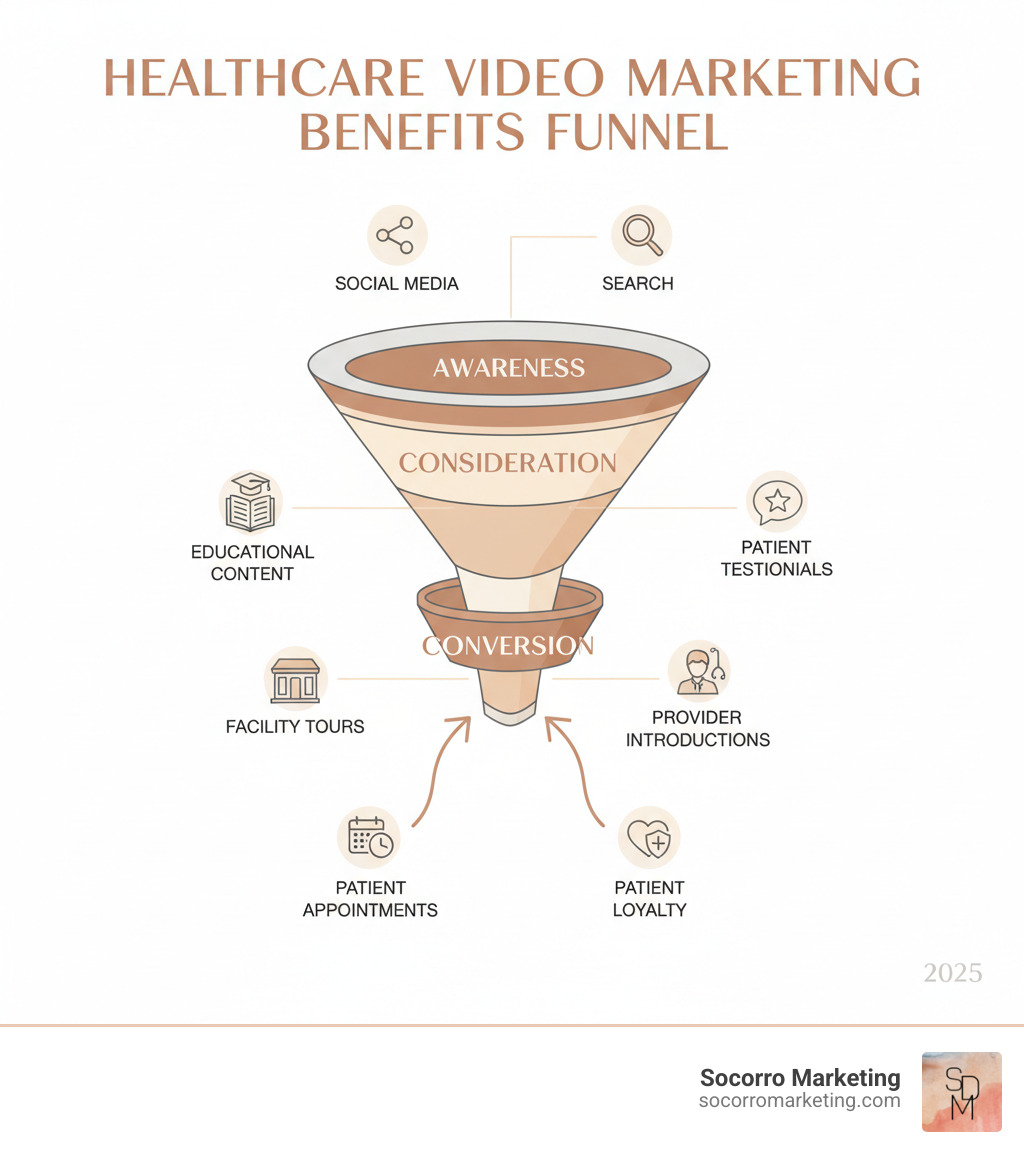
Video has become essential to how we communicate with patients. It’s woven into every aspect of your Digital Marketing strategy, from your website to your social media and patient education efforts. Here’s why it matters so much for healthcare practices.
Trust is everything in healthcare. When patients choose you, they're trusting you with their well-being. While physician bios and photos are a start, what if a potential patient could see your team in action? What if they could watch a doctor explain their approach to care or hear real patients share their stories?
That’s where video changes everything. When you put a human face in your video content, you build a relationship before the first appointment. The data backs this up: putting a human face in your video can increase conversion by 48%. Video lets your authentic personality shine through, allowing patients to see your compassion and hear your confidence.
Staff introductions, physician profiles, and behind-the-scenes glimpses of your practice humanize your brand. You become real people who patients can connect with emotionally—and that connection is what transforms a website visitor into a loyal patient.

Medical information can be confusing. Patients often leave appointments with unanswered questions. Video solves this problem. Instead of a dense brochure, a short video can show a procedure step-by-step. An animated video demonstrating how a knee replacement works is far more helpful than a paragraph of medical jargon.
This empowers patients to take an active role in their healthcare. When they understand their condition and treatment options, they make better decisions and have better outcomes. The appetite for this content is massive: Google saw 110 billion views on health condition videos in 2021. By creating educational videos, you meet patients where they are, in the format they prefer.
Embedding a video on your landing page makes visitors stop, watch, and engage. That engagement translates directly into action: more appointment requests and more patients. Your email marketing also gets a boost. Simply adding "video" to your subject line can increase email response rates by 25%.
Video is also inherently accessible. It fits perfectly into mobile moments, as most patients scroll on their phones. Social media platforms love video, meaning your message gets shared organically. From an SEO perspective, search engines favor pages with video content, ranking them higher in results. This visibility means more potential patients find your practice exactly when they need you.
Now that we understand why video marketing for healthcare matters, let's discuss creating content that connects with patients. You don't need to be a filmmaker; you just need to understand what types of videos work in healthcare.
Different situations call for different tools. Video can address every stage of the patient journey.
Effective videos are about authenticity, clarity, and compliance.
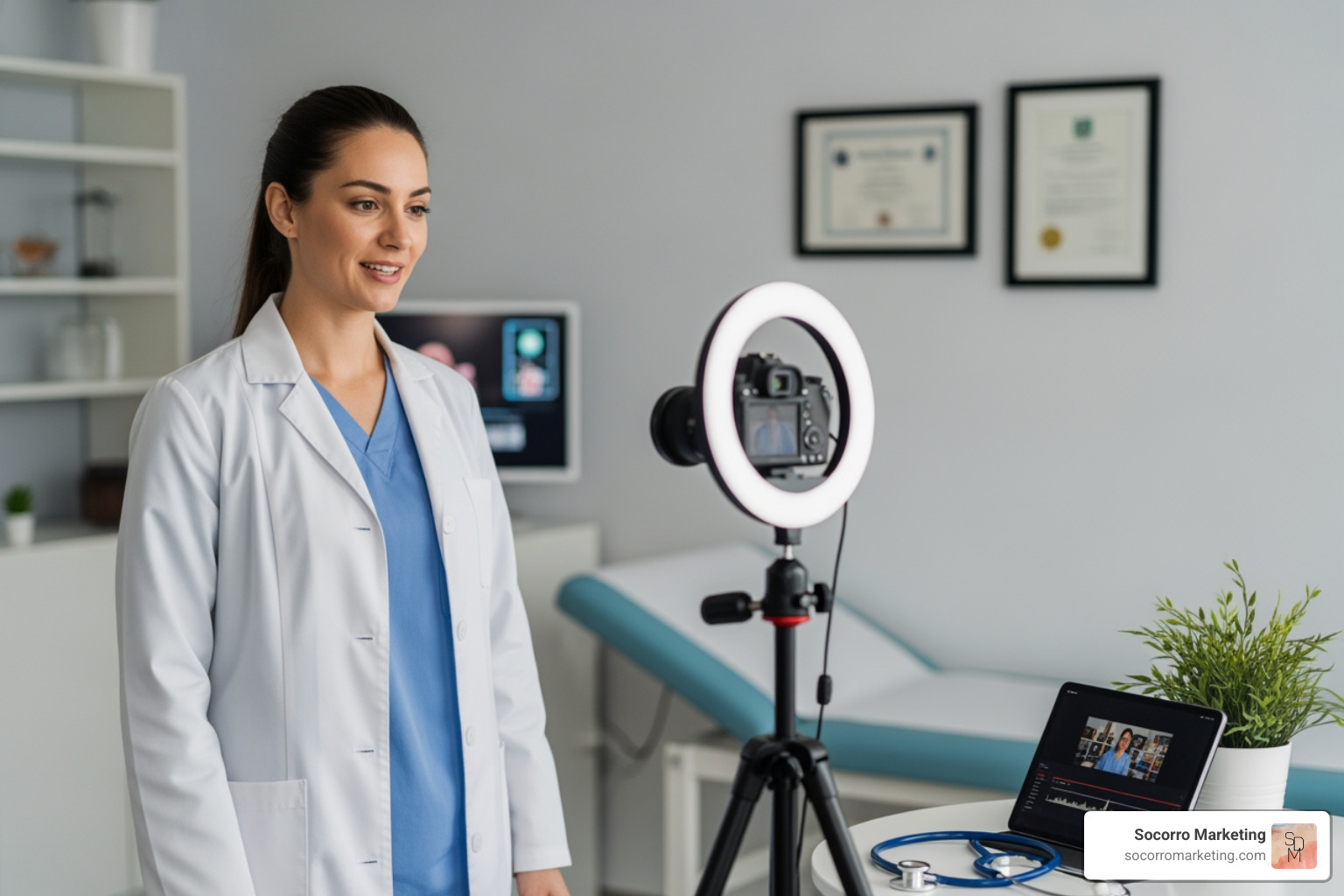
Learning from what others do well is a great way to inform your strategy. When it comes to video marketing for healthcare, several major healthcare systems have set the standard by combining authentic storytelling with strategic content.
Cleveland Clinic’s powerful video from Cleveland Clinic, "Empathy: the Human Connection to Patient Care," doesn't focus on technology. Instead, it reveals the hidden human stories within a hospital. By showing the secret struggles of patients, visitors, and staff, it reminds us that everyone is fighting a battle we know nothing about. This approach to brand humanization builds trust through emotional connection and genuine empathy, resonating with millions of viewers.
With over 1 million YouTube subscribers, Mayo Clinic has mastered creating consistent, valuable content. Their educational videos, like "How to Remove Ticks" (8.7 million views), offer practical patient education. They also spark engagement with creative campaigns like the #StrongArmSelfie campaign for colorectal cancer awareness, which turned a serious topic into a participatory social media movement. This blend of education and community engagement proves health information doesn't have to be dry.
Kaiser Permanente’s "Thrive" campaign takes a different approach, celebrating healthy, active living. By featuring real people pursuing their passions, the campaign focuses on preventative care and wellness rather than reactive treatment. This positions Kaiser Permanente as a partner in living your best life, not just a place to go when you're sick. The inspirational message resonates well with audiences thinking proactively about their health.
These examples show that authenticity wins every time. Success comes from focusing on providing real value to your audience, building relationships through content that matters to people facing real health concerns.
The world of video marketing for healthcare is constantly evolving. The innovations emerging now are making it easier for small practices to create compelling content that connects with patients. Here’s what you need to know to stay ahead.
Platforms like TikTok, Instagram Reels, and YouTube Shorts have transformed how people consume health information. These 15 to 60-second videos deliver value in bite-sized chunks. Don't dismiss these platforms; 1 in 5 Americans consult TikTok for health advice before calling a doctor. Your future patients are already there, looking for trustworthy voices. The key is to get to the point fast with one practical tip or a quick explanation.
Live streaming offers real-time human connection. A Facebook Live Q&A or an Instagram Live facility tour creates an immediacy that pre-recorded content can't match. Hosting monthly "Ask the Doctor" sessions, for example, allows you to address patient concerns immediately and builds a trusted community resource.

Artificial Intelligence (AI) is becoming an incredibly practical tool for small healthcare practices. AI-powered editing tools can automatically caption your videos, suggest edits, and even help generate scripts. For camera-shy providers, AI can create realistic avatars or voiceovers to deliver your message professionally.
AI also enables personalization at scale. Imagine sending each new patient a personalized welcome video or customized post-procedure instructions. This isn't science fiction; it's happening now. The data shows that 96% of marketers have seen positive ROI with AI-powered video content.
Beyond AI, Augmented Reality (AR) and Virtual Reality (VR) are opening new possibilities. AR can overlay educational information onto real-world views, while VR can offer immersive facility tours or detailed 3D walkthroughs of surgical procedures. While not yet essential, these technologies are becoming more accessible. The practices that experiment with them now will have a significant advantage as they become mainstream.
The future of healthcare video is about using these evolving tools to create more personal, helpful, and accessible connections with patients.
Creating videos is just the beginning. A good video marketing for healthcare strategy requires careful monitoring and adjustment to ensure it's delivering results.
Tracking a handful of meaningful metrics will tell you what's working. Focus on:
By consistently reviewing these numbers, you can refine your approach and double down on what works.
Video marketing has challenges, but they are manageable with the right strategy.
For more practical strategies, Read our Blogs for more tips.
It depends on your audience and goals. A multi-platform approach is best.
You don't need a Hollywood budget. Focus on authenticity and smart investments.
This is foundational and requires absolute seriousness. There are no shortcuts.
We've covered why video marketing for healthcare is essential for building trust, educating patients, and growing your practice. The key takeaway is that you don't have to do everything at once.
Start small. A simple introduction video, a quick Q&A, or a heartfelt patient testimonial can be powerful building blocks. Each video strengthens your connection with current patients while reaching new ones searching for care.
Focus on authentic storytelling. Your patients don't need Hollywood production values; they need to feel your compassion and trust your expertise. The most effective healthcare videos are genuine.
As a nurse-managed agency based in Golden, CO, Socorro Marketing understands the clinical nuances required for an effective video strategy. We know HIPAA compliance in practice, not just theory, and can translate your expertise into content that educates, reassures, and converts.
Whether you're a solo practitioner in Colorado, a clinic in Utah, or a specialty center in Arizona or New Mexico, video can transform how you connect with your community. It's about showing up authentically and providing genuine value.
Ready to improve your patient outreach and ensure your practice thrives? We're here to help you write your video success story. Explore our specialized Behavioral Health Digital Marketing services, and let's build a strategy that grows your practice while staying true to your mission.

